
Search behaviour is shaping health decisions
Where do people really go for health information?
Health information has never been more accessible. A symptom can be searched in seconds, a treatment explained in a short video, a medication debated in an online forum. The landscape feels vast and immediate. But when it comes to real decisions about health, where do people actually go first?
We asked our community at Research Opinions to run a simple poll to understand where people turn when they are looking for answers. The results were clear. 78% said they go straight to official websites such as the NHS or recognised health charities. A further 16% said they use AI tools. Fewer than 4% rely primarily on video platforms, and just 2% look first to online communities.
For all the noise around social media and influencer health content, recognised health authorities remain the primary source. Trust is still anchored in established institutions. At the same time, AI usage is no longer fringe behaviour. Nearly one in six respondents are already using AI tools to seek health information. That is not a distant possibility. It is active, everyday behaviour.
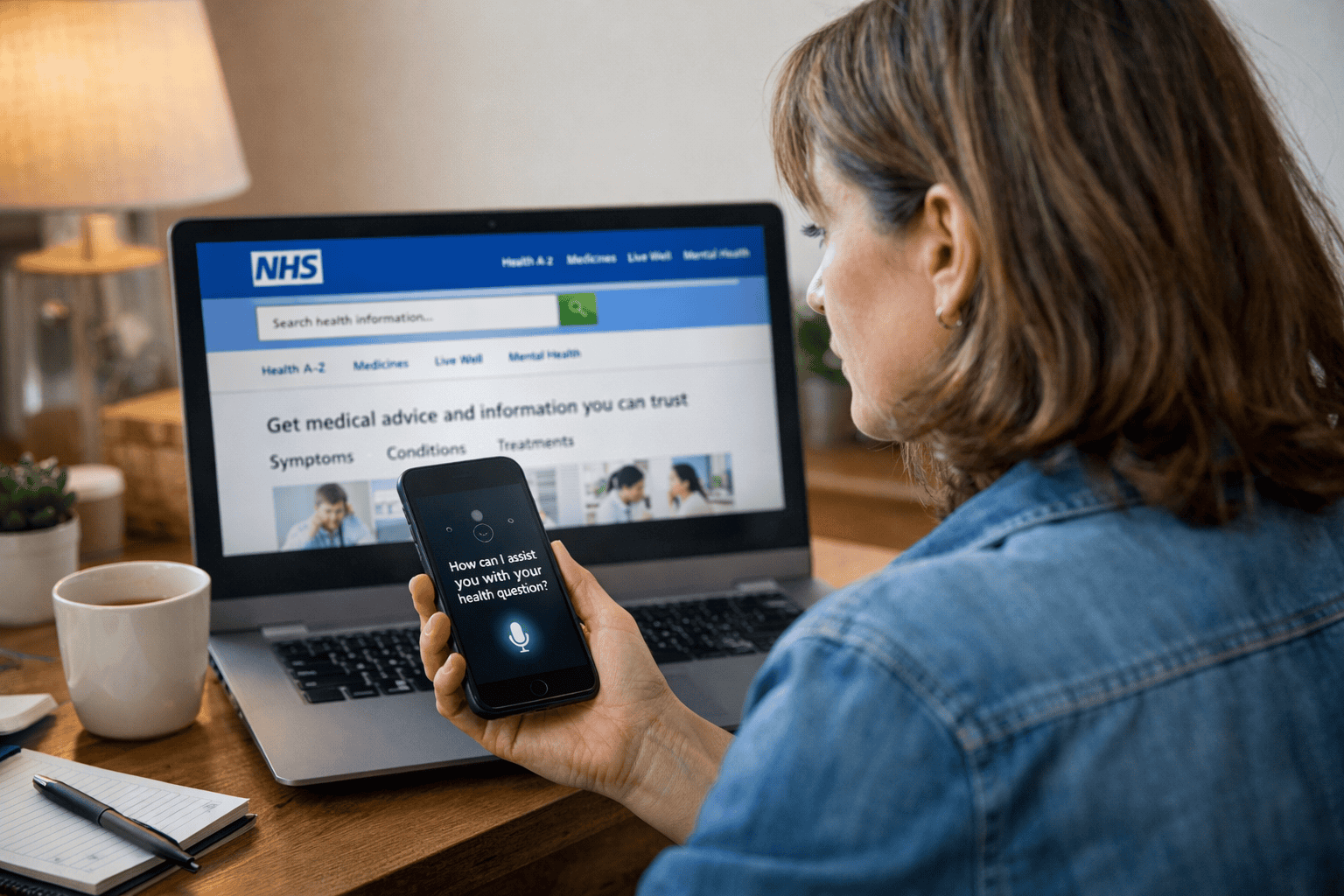
What is emerging is not a replacement of one source with another, but a layering of them. An initial question may begin with an AI tool, move to an NHS page for validation, and end in a conversation with a clinician. The journey is increasingly blended, with authority and accessibility working alongside one another.
For healthcare organisations, this has practical implications. The way information is structured, written and surfaced matters more than ever. Clarity matters. Accessibility matters. Authority still matters. But authority now needs to coexist with immediacy and ease of understanding. Where people look for answers influences how they interpret risk, evaluate treatments and form expectations before they ever step into a consultation room.
Understanding that behaviour is not about chasing digital trends. It is about recognising how health decisions are informed in reality. At Acumen Health, we see these shifts as an opportunity for sharper, more responsive research – research that reflects how people actually navigate information today.